
Georgetown owners face Seattle's roughly 0.99 percent effective rate. King County valuations regularly miss Georgetown factors worth contesting in 2026.
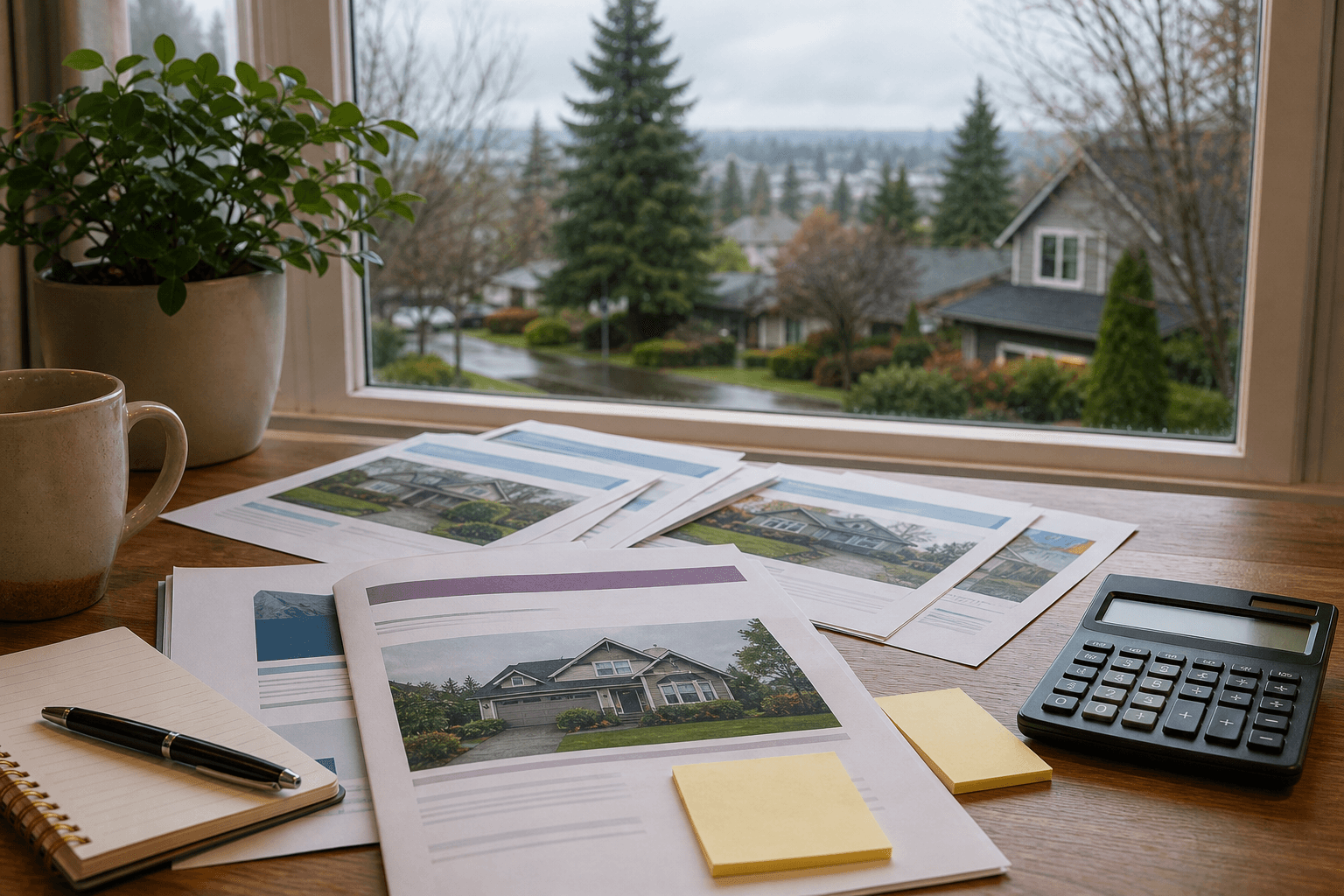
Georgetown is one of Seattle's least generic residential markets: craftsman bungalows and small houses embedded among industrial buildings, freight routes, Boeing Field, Airport Way South, and the Duwamish corridor. Georgetown bills turn on whether the model priced a home like a standard south Seattle bungalow or recognized the industrial and airport adjacency buyers see immediately.
If your property tax bill feels too high, the savings math below uses your own numbers. For a personalized review of your Georgetown home (a comp pull, a property record check, and a real savings estimate), enter your address on the homepage. The review is free; Fair Appeal only collects a percentage of first-year tax savings when the appeal actually wins.
Look up if you are overpaying on your Georgetown home.
King County reassesses every home every year and leans on neighborhood comps without seeing condition.
How are Georgetown property taxes calculated?
King County reassesses every Seattle property every year, including every parcel in Georgetown. The Assessor’s mass-appraisal model weights square footage, year built, lot size, and recent neighborhood sales, then applies the combined Seattle levy rate (around 0.99 percent for 2026) to the result. Voter-approved levies for schools, transit, parks, and city services layer on top of the state and county base.
What the model rarely picks up are the property-specific and Georgetown-specific factors that buyers actually price into offers, and that is where most appeals are won. Anchored by Airport Way South, Boeing Field, and the Georgetown Steam Plant, Georgetown’s housing stock has its own quirks the citywide model does not always capture.
Where does the Assessor get Georgetown wrong?
Georgetown gets overassessed when the model smooths industrial-residential friction into ordinary neighborhood appreciation. Homes near Airport Way South, Corson Avenue South, rail spurs, truck routes, or Boeing Field can trade differently from similar-sized houses farther from freight and flight activity.
Useful evidence is concrete: photos of nearby industrial frontage, distance to Boeing Field or rail activity, and comps from Georgetown homes with comparable exposure. A Beacon Hill or Columbia City bungalow may look similar in square footage, but it needs adjustments before it says anything reliable about a Georgetown parcel.
Georgetown comps to South Park (south), the western edge of Beacon Hill, and the SoDo industrial residential pockets. A tight comp set wins these cases.
What does a Georgetown appeal actually look like?
Georgetown homeowners appeal through the King County Board of Equalization, the same independent panel that hears every Seattle and King County appeal. The 2026 filing window runs through July 1, or 60 days after your Official Property Value Notice mails, whichever is later. The hearing is short, usually 15 to 30 minutes by phone, and the Board wants concrete evidence: comparable sales, documented condition issues, or an outright error in the property record.
For the broader Seattle context, see the Seattle property taxes guide or the 2026 King County property tax appeal guide.
Is a Georgetown appeal worth filing?
At Seattle’s 0.99 percent effective rate, every $10,000 of assessed-value reduction is roughly $100 off the annual bill. A 10 percent reduction on a typical Georgetown home (recent sale prices around $675,000, assessed values somewhat lower) pulls roughly $600 a year off the bill, and reductions tied to documented evidence often land larger. Most Georgetown homes have at least one angle worth pursuing, the question is which one.
FairAppeal reviews your property and decides whether to file. Fair Appeal handles the full process from review through hearing, and only charges a percentage of first-year tax savings if the appeal actually reduces your taxes. the 2026 window is still open.
Look up if you are overpaying on your Georgetown home.
King County reassesses every home every year and leans on neighborhood comps without seeing condition.